

(скат-)манта, морской дьявол
Англо-русский современный словарь.
.
- Смотреть что такое «sea devil» в других словарях
- Origin of view and description
- Appearance and features
- Where does the sea devil live?
- What does the sea devil eat?
- Features of character and lifestyle
- Social structure and reproduction
- Natural enemies of sea devils
- Population and species status
- Guard the sea devils
- Horror Short Film «Sea Devil». Presented by ALTER (June 2023).
- All CreaturesAbilities | Monsters | NPCsAll | Families | TemplatesA | B | C | D | E | F | G | H | I | J | K | L | M | N | O | P | Q | R | S | T | U | V | W | X | Y | Z
- Sea Devil Scout
- Members
Смотреть что такое «sea devil» в других словарях
1) глубоководный удильщик , цератиевые
2) морской черт
Универсальный англо-русский словарь.
.
.
Armor Class 11
Hit Points 52 (8d10 + 8)
Speed 10 ft., swim 60 ft.
Skills Perception +2, Stealth +3
Senses darkvision 60 ft., passive Perception 12
Languages Aquan
Challenge 1 (200 XP)
This creature looks like an octopus, only much larger and of a bright scarlet color, striped with black.
Sea devils are aptly named; they are not the smaller creatures that sometimes rise to the surface, go near the shore, or are caught by fisherman. The deep sea devils are monsters who inhabit caves in the rugged, mountainous regions of the ocean. They are evil spirits who delight in injuring all who meet them.
Ink Sacs. They carry big sacks in front of them, where they conceal the ink. Whenever they choose, the sea devils press out this ink, and it colors the water for a great space around them.
Devil’s Net. Sea devils can work together to create a net of sorts, interlacing their arms like the branches of trees in winter, when the leaves have fallen and left them bare.
They have an awful laugh, and they are fond of laughing hideously at those they have trapped.
The most dangerous of all sea devils is their prince, the largest and fiercest of his species. Fortunately sea devil princes are quite lazy, never moving from their position.
Their people bring him food to and take his commands.

Рисунок Морта Кюнцлера (Mort Kunstler).
Много веков скатов преследовала зловещая репутация.
А самого крупного представителя этих пластиножаберных хрящевых рыб – мант даже прозвали «морским дьяволом».
КТО ОН – МОРСКОЙ ДЬЯВОЛ?

Рисунок Джона Пайка (John Pike).
Скаты — ближайшие родственники акул. Те и другие состоят из хрящей, а не из костей. А еще скаты и акулы являются одними из самых древних рыб, и, говорят, некогда были весьма похожи. Только акулы всегда были хищниками и борцами, они сохранили свой облик. А скаты подстраивались под ситуацию, и жизнь их «плющила». И теперь акулы непрестанно снуют в воде, а скаты прячутся от них на дне.

Рисунок Джона Флоэрти младшего (John Floherty Jr.).
Впрочем, люди с давних пор уважительно относились к тем и другим. И боялись их. Скаты, за счет своих внушительных размеров и пугающей внешности, казались людям очень опасными. Например, бытовало заблуждение, что манты, чья ширина тела достигает 7 метров, могут раздавить ныряльщика, обняв его своими плавниками-крыльями, и что им не составит труда и вовсе проглотить его. Не случайно жители некоторых африканских племен приносили акулам и скатам человеческие жертвы, пытаясь задобрить их убийством детей. Особенно пугали людей манты, которых они прозвали «морским дьяволом». Встреча с ним в море всегда считалась дурным предзнаменованием. А если манта попадалась в сети, то следовало отпустить ее от греха подальше.

Впрочем, это еще вопрос, кого следует считать настоящим морским дьяволом. Манта практически безопасна для человека. Эти безобидные гиганты кормятся планктоном и мелкой рыбой. Они, возможно, самые умные из всех морских обитателей, поскольку обладают самым большим по отношению к общей массе тела мозгом, из всех ныне живущих рыб. Но человек безжалостен к ним. Скатов добывают ради их мяса, считающегося деликатесом во многих странах, ради их хрящей, используемых в медицине, и ради их шкуры, из которой изготавливают различные модные аксессуары. Но еще больше скаты страдают от загрязнения людьми окружающей среди. Ныне манты вообще оказались на грани вымирания.
И в этой связи можно привести одну древнюю притчу-легенду:
У одного моряка умерла мена, которую он очень любил. Он вышел в море и громко крикнул, взывая к морскому дьяволу:
— Верни мне жену!
Из пучины моря послышался ответ.
— Верну, если ты взамен утопишь десять кораблей.

Манта в полете.
Моряк подался в пираты. Он нанимал в свою команду самые отбросы берегового братства. Сначала они нападали и грабили какое-нибудь судно, а потом он топил свой корабль со всей командой. Спасался только капитан, прибрав к рукам награбленные деньги. На них он покупал новое судно и набирал новую команду. Когда моряк утопил свой десятый корабль он принялся взывать, чтобы море вернуло ему жену. Вода вокруг его шлюпки почернела и забурлила. А потом из глубины морской на поверхность стали подниматься люди, которых он утопил. Все они кланялись ему как господину. И в этот миг моряк понял, что он и есть морской дьявол.
РАЗНЫЕ И ОПАСНЫЕ

Шип на хвосте ската зацепился за гениталии парня в Китае.
Впрочем, безобидными скатов назвать нельзя. Они кусаются, жалят довитым шипом и вьют хвостом. Ежегодно только в США регистрируется около полутора тысяч человек, получивших ранения после встреч со скатами. И хотя в основном это незначительные раны возле ступней и лодыжек, но порой такая встреча может закончится для человека летальным исходом.
Скаты обитают во всех морях и океанах и живут как в холодных водах Арктики и Антарктики, так и в тропиках, как в морской воде, так и в пресноводной. Они представлены множеством видов. Но, пожалуй, самыми загадочными являются Гнюсы, или электрические скаты. Для защиты у них на дисках грудных плавников имеется орган, генерирующий электрический ток. Самый крупный из гнюсов — черный электрический скат. Его вес может достигать 90 кг. И эти особи могут так «шабаркнуть» человека током, что мало не покажется. Черные скаты способны генерировать электрический ток напряжением 220 вольт. Таким разрядом запросто можно оглушить ныряльщика, который после этого попросту утонет. Скат бьет током невысокого напряжения, но большой силы, что может привести к параличу конечности или всего тела человека. Летальные случаи учету не поддаются, поскольку, когда утопника выловят, он уже не может поведать о причинах своей смерти. Но спасшиеся дайверы рассказывают, что не так страшен разряд тока ската, как паника, справиться с которой на глубине под силу далеко не всем.
Самая распространенная разновидность скатов – ромбовидные. Они обитают от Канарских островов до Норвегии. Встречается они и в Черном море. У этих скатов есть скромные электрические органы и такие же скромные по размеру шипы. В европейских водах Атлантического океана встречаются ромбовидные скаты, которых люди прозвали «морскими лисицами». У них 36-45 зубов, причем у самцов они острые, а у самок приплюснутые.

Американский хвостокол (Dasyatis thetidis).
А самой опасной разновидностью скатов считаются Хвостоколовые, которым человек дал неофициальное название «Морской кот». Они обитают во всех тропических и субтропических морях, заплывают в лагуны и любят полежать на прибрежном мелководье. Большинство хвостоколовых ведут донный образ жизни. Поскольку большую часть времени «морские коты» проводят на дне, зарывшись в грунт, на них можно случайно наступить. И за то, что его потревожили скат с большой вероятностью ответит ударом хвоста с ядовитым шипом.
Их ядовитые шипы фигурируют в ряде мифов Древней Греции. Например, в мифе о знаменитом своей хитростью царе Итаки Одиссее. Как-то его сын Телегон, рожденный Киркой, отправился на поиски отца и высадился на Итаке. А Одиссей думая, что это приплыли враги, напал на них. В схватке Телегон нанес ему смертельную рану копьем, наконечник которого был сделан из шипа морского кота. Так исполнилось предсказание Триресия о том, что Одиссей погибнет от моря. Известно, что и много лет спустя со времен Древней Греции аборигены Австралии и Малайзии, а также индейцы Центральной Америки использовали иглу ската в качестве острия своих копий.

Скат тэниура-лимма (лат. Taeniura lymma).
Яд скатов состоит из десятка аминокислот, нескольких ферментов и серотонина. Боль вызывает именно серотонин — под его воздействием начинаются спазмы гладкой мускулатуры. А ферменты разрушают клетки и ткани. Правда, обычно все не так страшно. Если яд попал в конечности, организм человека сам начинает с ним бороться, повышая температуру. Поэтому реальная опасность жизни человека возникает только тогда, когда скат ударит его хвостом в спину или брюшную полость. А самое страшное, если удар шипа ската придется в область сердца. В этом случае человек практически обречен — серотонин парализует сердечную мышцу. К счастью, такие попадания крайне редки.

Самой известной жертвой скатов считается австралийский натуралист и телеведущий Стивен Роберт «Стив» Ирвин. Как-то он задумал снять новый фильм под названием «Смертельно опасные существа океана». И спустился с аквалангом под воду, чтобы снять больших скатов-хвостоколов у Большого Барьерного рифа. Ведущий уже не раз это проделывал. Но это погружение стало для него роковым.

Когда Стив Ирвин находился под скатом, тот поднял свой хвост с ядовитым жалом на конце и ударил им в грудь Стива. Зубец почти в метр длиной пробил ему грудь, и Ирвин буквально истек кровью. Последние свои слова «Я умираю» он произнес их своему оператору, Джастину Лионсу, который плыл вслед за Стивом Ирвином, и заснял его смерть на видеопленку.
Стив Ирвин — отнюдь не единственная жертва скатов. Известно, что на пляже Лодердейл-Бич в австралийском островном штате Тасмания скат ужалил в них живота 42-летнего купальщика. Мужчина скончался еще до приезда медиков. Дайвер Филипп Чен четверть века работал с морскими обитателями океанариума Сингапура. Но когда океанариум стали закрывать, а его обитателей отлавливать и перевозить в другое место, скат-хвостокол не пожелал менять облюбованное место. Он нанес смертельный удар ядовитым шипом Чену в грудь.
В СМИ попадаются и вовсе фантастические истории. Например, о смерти некоей туристки, загоравшей в лодке, которая погибла после того, как на нее упал скат.

Поскольку ежегодно, ранения от скатов получают тысячи человек, то разрабатываются целые инструкции, как обезопасить себя от них. В частности, рекомендуется ходить с палкой по песчаному мелководью и при этом не шагать, как по земле, а перетаскивать ноги. Если скат поднял хвост – это угроза с его стороны, и лучше держаться от него подальше. Если же избежать удара не удалось, лучше предоставить медикам удаление ядовитого шипа. Он состоит из клиновидной колючки с зубцами по обеим краям. Его удаление является сложным процессом и весьма болезненным. Как и большинство рыбных токсинов, яд ската представляет собой белок, который разрушается при нагревании. Поэтому в качестве первой помощи рекомендуют погрузить рану в горячую, но не обжигающую воду.

Любопытно, что рыба-пила — это тоже скат. Причем в длину она может вымахать, как манта в ширину — до 7 метров. Доказано, что легенды не совсем врут. Рыба пила действительно способна утопить небольшое деревянное судно, пробив ударом окостеневшего окончания морды его борт, но при этом выдумка, что она еще и расширяет дыру, распиливая борт.
Однако ныне опасность от рыбы-пилы невелика. Она — исчезающий вид. И хотя с 2007 года ее вылов запрещен во всем мире, но популяция этого ската продолжает сокращаться.
Статьи и фоторейтинги по теме:
Убитые на охоте
Шакалы и койоты
No rank: Double-sided symmetrical
No rank: Secondary
Class: Cartilaginous fish
Family: Eagle rays
View: Sea Devil
Sea Devil (manta ray) is one of the largest fish in the world. Reaching a width of 8.8 m, the manti is much larger than any other type of ramp. For many decades there was only one known species, but scientists divided it into two: oceanic, preferring more open sea spaces and reef, which is more coastal in nature. Now a giant manta ray has a huge impact on tourism, creating a diving industry for tourists who want to swim along these gentle giants. Let’s find out more about them.
Origin of view and description

Photo: Scat Sea Devil
The name «Manta» translated from Portuguese and Spanish means the mantle (cloak or blanket). This is due to the fact that the type of trap in the form of a blanket has traditionally been used to catch stingrays. Historically, sea devils have been feared due to their size and strength. Sailors believed that they were dangerous for people and could sink boats by pulling anchors. This attitude changed around 1978, when divers in the Gulf of California discovered that they were calm and that humans could interact with these animals.
Interesting fact: Sea devils are also known as «cuttlefish» because of their horny head fins, which give them a «wicked» appearance. It was believed that they could sink a diver, wrapping it with their large «wings».
Manta rays are members of the order Tailed-like (Myliobatiformes), which consists of stingrays and their relatives. Sea devils evolved from the lower ramps. M. birostris still has a vestigial sting remnant in the form of the caudal spine. Mantle rays are the only species of rays that have turned into filters. In a DNA study (2009), differences in morphology were analyzed, including color, phenogenetic variability, spine, skin teeth and teeth of different populations.
Two different types appeared:
A 2010 DNA study near Japan confirmed the morphological and genetic differences between M. birostris and M. alfredi. Several fossilized skeletons of mantle rays were found. Their cartilaginous skeletons do not retain well. Only three sedimentary strata containing mantle fossils are known, one of the Oligocene in South Carolina and two of the Miocene and Pliocene in North Carolina. They were originally described as Manta fragilis, but were later reclassified as Paramobula fragilis.
Appearance and features

Photo: Sea Devil
Sea devils move easily in the ocean thanks to their large pectoral «wings.» The manta birostris has caudal fins and a small dorsal fin. They have two lobes of the brain that extend forward from the front of the head, and a wide, rectangular mouth containing small teeth exclusively in the lower jaw. The gills are located on the underside of the body. Manta rays also have a short, whip-like tail, which, unlike many other rays, does not have a sharp tooth.
Atlantic mantis cubs weigh 11 kg at birth. They grow very quickly, doubling the width of the body from birth to the first year of life. Sea devils show weak dimorphism between the sexes with wingspan in males in the range from 5.2 to 6.1 m and in females in the range from 5.5 to 6.8 m. The largest specimen ever recorded was 9.1 m
Interesting fact: Sea devils have one of the highest ratios of brain mass to body and the largest brain size among all fish.
One of the distinguishing features of the mantle and the entire class of cartilaginous is that the entire skeleton is made of cartilage, providing a wide range of movements. These rays vary in color from black to grayish-blue along the back and white bottom with grayish spots, which are used to identify individual rays. The skin of the sea devil is rough and scaly, like most sharks.
Where does the sea devil live?

Photo: Devil underwater
Sea devils are found in tropical and subtropical waters in all major oceans of the world (Pacific, Indian and Atlantic), and also go to temperate seas, usually between 35 ° north and south latitude. Their range includes the coasts of southern Africa, from southern California to northern Peru, from North Carolina to southern Brazil and the Gulf of Mexico.
The distribution area of giant manti is very extensive, although they are fragmented in different parts of it. They are usually observed in the open sea, in ocean waters and near coastlines. Gigantic mantles are known to undergo prolonged migrations and can visit colder waters for shorter periods of the year.
Interesting fact: The fish, which scientists supplied with radio transmitters, traveled 1000 km from the place where they were caught and went down to a depth of at least 1000 m. M. alfredi is a more resident and coastal species, unlike M. birostris.
The sea devil remains closer to the coast in warmer waters, where food sources are plentiful, but sometimes they can be found further from the coast. They are common off the coast from spring to autumn, but in winter travel farther from the coast. During the day they stay close to the surface and in shallow water, and at night they swim at great depths. Due to their wide range and rare distribution across the oceans, there are still gaps in the knowledge of scientists about the life history of giant devils.
Now you know where the stingray devil lives. Let’s see what he eats.
What does the sea devil eat?

Photo: Sea Devil, or Manta
Manti are filtering by type of feeding. They constantly swim with their mouths open, filtering out plankton and other small food from the water. To help with this strategy, giant mantas have special valves known as lobes of the brain that help direct more water and food into the mouth.
They slowly swim in vertical loops. Some researchers suggest that this is done in order to stay in the feeding area. Their large, gaping mouths and expanded lobes of the brain are used to drive planktonic crustaceans and small schools of fish. Manti filters water through the gills, and organisms in the water are held up by a filtering device. The filtering device consists of spongy plates in the back of the mouth, which are made of pinkish-brown tissue and pass between the supporting structures of the gills. Manta birostris teeth do not function during feeding.
Interesting fact: With an extremely high concentration of food in the places of feeding manti, they can, like sharks, succumb to food madness.
The basis of the diet is plankton and fish larvae. Sea devils are constantly moving beyond plankton. Sight and smell help them find food. The total weight of food consumed every day is about 13% of the weight. Manti slowly swim around prey, driving it into a heap, and then quickly swim with an open mouth through the accumulated marine organisms. At this time, the head fins, which are folded into a spiral tube, unfold during feeding, which helps the rays to direct food into their mouths.
Features of character and lifestyle

Photo: Devil Fish
Manta rays are lonely, free swimmers who are not territorial. They use their flexible pectoral fins to gracefully swim across the ocean. The head fins of the sea devil are most active during the mating season. It was recorded that manti jump out of the water to a height of more than 2 m, and then hit its surface. By doing this, a stingray can remove annoying parasites and dead skin on its large body.
In addition, sea devils visit a kind of «sewage treatment plant», where small remora fish (cleaners) swim near manti, collecting parasites and dead skin. Symbiotic interaction with the non-stick fish occurs when they attach to giant manta rays and ride on them while they feed on parasites and plankton.
Mantes’ swimming behavior varies in different habitats: when traveling to depth, they move at a constant speed in a straight line, on the shore they usually warm up or swim idle. Mantas can travel alone or in groups of up to 50. They can interact with other species of fish, as well as with seabirds and marine mammals. In the group, individuals can make air jumps one after another.
Social structure and reproduction

Photo: Sea Devil from the Red Book
Although giant mantis are usually solitary animals, they combine to feed and mate. The sea devil becomes sexually mature at 5 years old. The mating season starts from the beginning of December and lasts until the end of April. Mating takes place in tropical waters (t 26-29 ° C) and around rocky reef zones with a depth of 10-20 meters. Stingrays sea devils gather in large numbers during the mating season, when several males look after one female. Males swim right behind the tail of the female at higher than usual speeds (9-12 km / h).
This courtship will last about 20-30 minutes, after which the female reduces her swimming speed, and the male squeezes one side of the female pectoral fin, biting it. He adjusts his body to the body of females. Then the male will insert his clamp into the female’s cloaca and inject his sperm, usually it lasts about 90-120 seconds. Then the male quickly swims away, and the next male repeats the same process. However, after the second male, the female usually swims, leaving behind other grooming men.
Interesting fact: Giant sea devils have one of the lowest reproduction among all branches of stingrays, usually giving birth to one fry every two to three years.
The pregnancy period of M. birostris is 13 months, after which 1 or 2 live cubs are born in females. Babies are born, wrapped in pectoral fins, but soon become free swimmers and take care of themselves. Manti puppies reach a length of 1.1 to 1.4 meters. There is evidence that sea devils live for at least 40 years, but little is known about their growth and development.
Natural enemies of sea devils

Photo: Devil in the water
Mantas have not developed special protection against predators, except for tough skin and a size that does not allow attacking smaller animals.
It is known that only large sharks attack stingrays, namely:
The greatest threat to stingrays is overfishing by humans, which is not evenly distributed across the oceans. It is concentrated in areas that provide the food resources it needs. Their distribution is very fragmented, so individual subpopulations are located at large distances, which does not give them the opportunity for mixing.
Both commercial and artisanal fisheries target the sea devil because of its meat and other products. They are usually caught using nets, trawls and even harpoons. Many mantas used to be caught in California and Australia for their liver oil and skin. The meat is edible and is eaten in some states, but less attractive in comparison with other fish.
Interesting fact: According to a study of fisheries in Sri Lanka and India, more than 1000 pieces of sea devils are sold annually in the country’s fish markets. In comparison, in M. birostris populations, at most key locations of M. birostris clusters worldwide, it is estimated that there are significantly fewer than 1000 individuals.
The demand for their cartilaginous structures is due to recent innovations in Chinese medicine. To meet the growing demand in Asia, targeted fishing has now developed in the Philippines, Indonesia, Madagascar, India, Pakistan, Sri Lanka, Mozambique, Brazil, Tanzania. Every year, thousands of skates, primarily M. birostris, are caught and killed exclusively for their gill arches.
Population and species status

Photo: Devil in nature
The most significant threat to giant manta rays is commercial fishing. Target fishery for manta rays has significantly reduced the number of populations. Due to their life expectancy and low reproduction rates, overfishing can seriously reduce the local population with a small probability that individuals living in other places will replace it.
Interesting fact: Although conservation measures have been introduced in many marine devil habitats, the demand for gill arches of the manti and other parts of its body has risen sharply in Asian markets. Fortunately, the interest of scuba divers and other tourists seeking to watch these large fish has also grown. This makes sea devils more valuable in living form than as a catch from fishermen.
The tourism industry can provide the giant mantle with more protection, but the value of meat for traditional medicinal purposes still poses a danger to this species. Thus, it is important for scientists to continue to monitor manti populations to ensure species conservation and to determine if other localized species exist.
In addition, sea devils are subject to other anthropogenic threats. Since manti must constantly swim in order to flush oxygen-rich water through the gills, they can become tangled and suffocate. These fish cannot swim in the opposite direction, and because of their protruding head fins, they can become entangled in fishing lines, nets, ghost nets, and even in mooring lines. Trying to free themselves, they get entangled further. Other threats or factors that can affect the amount of manti are climate change, pollution from oil spills and ingestion of microplastics.
Guard the sea devils

In 2011, manti began to be strictly protected in international waters due to their inclusion in the Convention on Migratory Species of Wild Animals. Although individual countries protect mantas, it often migrates through unregulated waters, at increased risk. IUCN established the status of M. birostris as “vulnerable with an increased risk of extinction” in November 2011. In the same year, M. alfredi was also classified as vulnerable with local populations of less than 1000 individuals and with little or no exchange between subgroups.
Sea Devil is under protection, hunting in Mexican waters was banned back in 2007. However, this ban is not always respected. More stringent laws apply on the Albox Island off the Yucatan Peninsula, where sea devils are used to attract tourists. In 2009, Hawaii became the first in the United States to introduce a ban on killing manta rays. In 2010, a law was passed in Ecuador prohibiting all types of fishing on these and other skates.
Horror Short Film «Sea Devil». Presented by ALTER (June 2023).
All CreaturesAbilities | Monsters | NPCsAll | Families | TemplatesA | B | C | D | E | F | G | H | I | J | K | L | M | N | O | P | Q | R | S | T | U | V | W | X | Y | Z
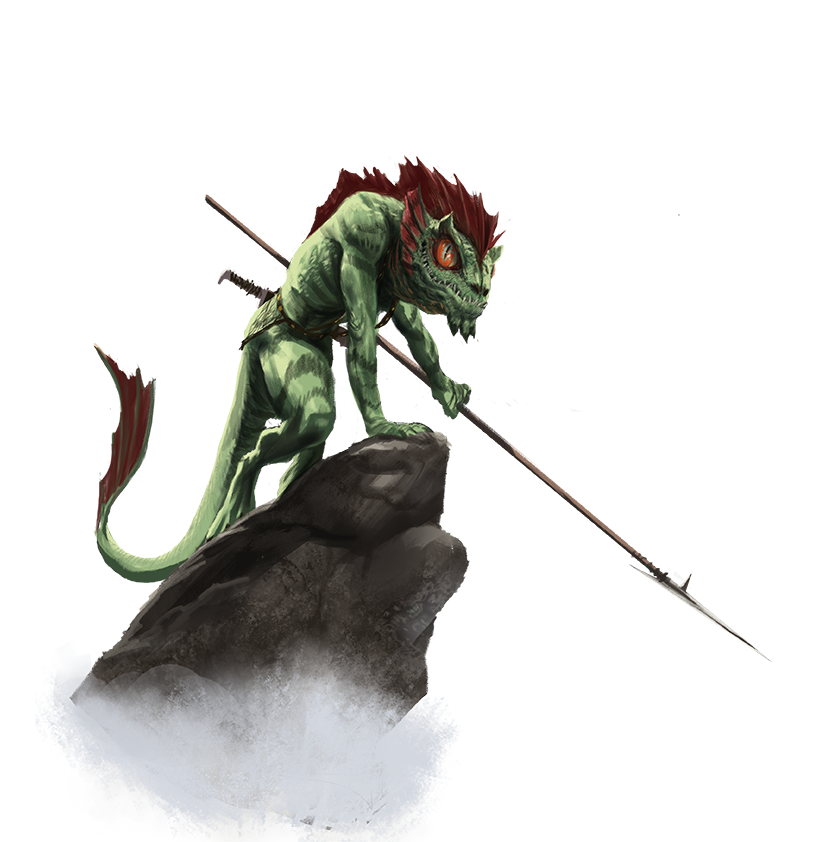
Scouts, among the lowliest (and most disposable) of sea devils, ply the inky waters of the ocean in search of aquatic prey, tread ashore to gauge landborne threats, or charge into battle with the advance forces of a greater sea devil war party.
Recall Knowledge — Humanoid (Society): DC 16Unspecific Lore: DC 14Specific Lore: DC 11
Sea Devil Scout
SourceBestiary pg. 286PerceptionLanguagesAquanSkillsAthleticsIntimidationStealthSurvivalStrDexConIntWisChaShark CommunementaltelepathyItemslongspearspear
SpeedBlood Frenzy (rage) Requirements The sea devil is not fatigued or already in a frenzy. Trigger The sea devil deals bleed damage to a living creature. Effect The sea devil flies into a frenzy that lasts 1 minute. While frenzied, the sea devil gains a +1 status bonus to attack rolls with its claws and jaws, gains a +4 status bonus to damage rolls with its claws and jaws, gains 7 temporary HP until the end of the frenzy, and takes a –2 status penalty to AC. The sea devil can’t voluntarily stop its frenzy. After its frenzy, the sea devil is fatigued.Bloodletting When the sea devil deals piercing or slashing damage, it also deals 1d4 persistent bleed damage if the target was flat-footed or if the attack was a critical hit.
Source Bestiary pg. 286Sea devils are horrid, amphibious humanoids who lurk in Golarion’s oceans and crawl ashore to steal away victims beneath the veil of darkness. When an entire fishing village disappears overnight, sea devils are the first suspects.
Far from mindless monstrosities, sea devils are terribly intelligent, with a cunning limited only by their strict adherence to hierarchy. They call themselves “sahuagin” but have wholly embraced their enemies’ name for their kind as their own. Their cultural militancy enables sea devils to act in concert to perform grand acts of sabotage, marauding, and pillaging, and only the strongest (and most conniving) members of the tribe make it to the top of the social ladder. For all their discipline, however, sea devils are widely known to snap into murderous frenzies at the scent of blood. Even the best-laid plans can fall apart when a sea devil breaks ranks to revel in the spilled blood of their victims, an indulgence that can quickly cause a chain reaction of bloodthirsty ecstasy throughout an entire raiding party. For this reason, sea devils typically capture landborne quarry using nets and ropes, dragging them to the depths of the sea before making even a single incision.
Among sea devil society, individuals are rewarded based on their performance during hunts and shore excursions, with rebels and outliers quickly culled from the ranks. Every pup is given a fair chance, however, and even the lowest-born sea devil can strive for the rank of commander, general, or perhaps even king or queen. Sea devils in positions of leadership tend to be among the largest, most violent, and most calculating of their kind, and fully realized sea devils are skilled warriors capable of capturing entire villages on their own. The most powerful sea devils are mighty kings and queens who coordinate the activity of lesser sea devils across territories spanning leagues, foiling attempts at their positions via manufactured blood feuds and wars against their numerous enemies ashore and underwater.
Members
Sea Devil «Diplomacy»

